In December 2023, SNOA joined the Arizona Partnership for Immunization (TAPI) and two other organizations to create the Arizona School Vaccine Coalition under the National Leadership Academy for the Public's Health (NLAPH), Cohort 13. The NLAPH is funded by the CDC and delivered by the Public Health Institute. The program just finished in July.
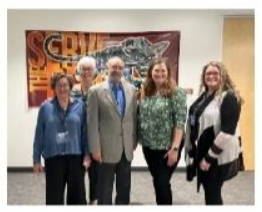 During the seven months, our coalition members (pictured from the left: Lynn Moriarty, Kate Whitman, Dr. Caswell Evans (coach), Laura Smith, and Pat VanMaanen, attended webinars, an in-person retreat, and regular meetings with our coach, Dr. Caswell Evans. We gained incredible insight and new knowledge about health equity, data mining, framing messages, strategic program planning, and sustainability. These tools helped us further understand Arizona's childhood vaccine issues, including declining vaccine rates and increasing use of personal exemption forms and draft actions to change the vaccine rate trajectory in Arizona.
We reviewed the ADHS data provided by the Immunization Data Report (IDR) and conducted additional data analysis to better understand the decline vaccine rates and increasing use of personal exemption forms. Initially, we thought most issues lay in primarily rural areas, but our deeper dive into the data provided this was untrue. Mapping the IDR data based on individual schools revealed that vaccination and exemption rates are not related to zip codes but are school-specific. You can have schools down the street from one another with very different vaccination and exemption rates. We further learned that Arizona charter schools have over two times the average personal exemption use statewide than district public schools, and about half of all charter schools serve predominantly low-income students.
Our Coalition goal has been revised to state that by the end of 2027, Arizona will have a 2% increase in school vaccine rates and a 1% decrease in personal exemption rates. This goal will be accomplished using three strategies: creating a resource hub, a mentorship program, and immunization advocates. A recent survey completed by school nurses and health office staff at the SNOA conference helped inform updates to the current resource hub on the TAPI website.
After completing the formal training program provided by NLAPH and the Public Health Institute, the Coalition team members are eager to put their learnings to work by building the Coalition, adding partners, and sharing their findings. We look forward to seeing SNOA members participate in the Coalition's efforts to meet our goal by 2027. Contact Laura Smith at lsmith@tapi.org to join the Coalition.